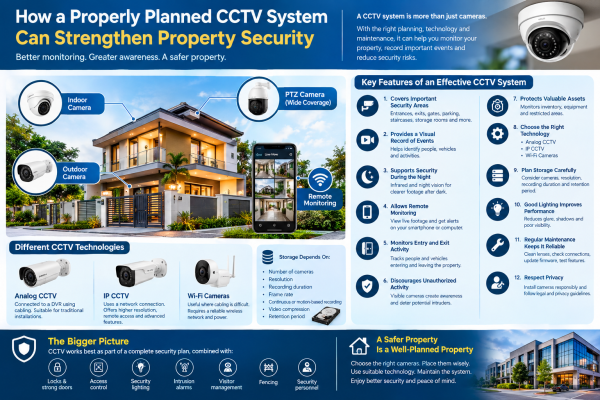
Security cameras have become an important part of modern property protection. Whether it is a home or an office, a well-planned CCTV system provides clear monitoring. It also works well in retail stores, warehouses, schools, and housing societies. It helps property owners stay informed about activity around their premises.
However, effective CCTV security is about more than simply installing cameras. The camera type, install location, lighting, recording system, storage, connectivity, and maintenance affect how useful the system is.
What Makes a CCTV System Effective?
A CCTV system should be designed according to the property's layout and security requirements. Different areas may require different types of cameras and features.
For example, an entrance may need a camera that captures clear details of people and vehicles. A large parking area may benefit from a wider field of view. Outdoor locations may also require weather-resistant cameras with reliable night vision.
1. Covers Important Security Areas
One of the first steps in CCTV planning is identifying areas that require monitoring.
These may include:
-
Main entrances and exits
-
Gates and driveways
-
Parking areas
-
Staircases and corridors
-
Cash counters
-
Storage rooms
-
Building surroundings
-
Restricted-access areas
Strategically positioning cameras can provide useful coverage while reducing unnecessary blind spots.
2. Provides a Visual Record of Events
CCTV cameras can continuously or selectively record activity around a property. If an incident occurs, recorded footage can provide information about what happened.
Depending on where the camera is placed and how clear the video is, the footage may show people and vehicles. It may also show movement. It may show the order of events.
This makes recording an important part of a complete security system.
3. Supports Security During the Night
Many security incidents can occur when a property is less active or poorly lit. Outdoor cameras with infrared or other night-vision technology can help monitor areas after dark.
When selecting night-vision cameras, consider the actual distance that needs to be covered, available lighting, camera specifications, and the surrounding environment.
Simply picking a camera with a high night-vision range does not ensure clear footage in every setup.
4. Allows Remote Property Monitoring
Modern CCTV systems can provide remote access through smartphones, tablets, or computers.
With an appropriate network connection and compatible equipment, property owners can check live footage while away from the premises. Some systems can also send notifications when specific events or motion are detected.
Remote viewing can be very useful for people who manage shops, offices, rental properties, and other locations. It helps when they are not there in person.
5. Helps Monitor Entry and Exit Activity
Entrances and exits are among the most important areas for CCTV coverage.
A properly positioned camera can help record people entering and leaving a property. For commercial properties, cameras can also be used around loading areas, staff entrances, and customer access points.
The camera should be placed carefully so it captures faces, vehicles, and other key details as clearly as possible.
6. Can Discourage Some Unauthorized Activity
Visible CCTV cameras may make people aware that activity is being recorded. This can discourage some opportunistic unauthorized behavior.
However, CCTV should not be considered a guarantee against crime. It works best as one part of a broader security plan. This plan can include access control, locks, lighting, alarms, and proper security procedures.
7. Helps Protect Valuable Assets
Every property has areas or items that may require additional monitoring.
For a retail shop, this could include inventory and billing areas. For an office, it may include equipment rooms or restricted areas. A warehouse may need coverage around valuable stock and loading zones.
Cameras can therefore be selected and positioned according to the specific risks and priorities of the property.
8. Choosing Between Different CCTV Technologies
Property owners can choose from different CCTV technologies depending on their requirements.
Analog CCTV
Analog cameras are commonly connected to a DVR using appropriate cabling. They can be suitable for certain traditional surveillance installations.
IP CCTV
IP cameras transmit video over a network and are commonly connected to an NVR or network infrastructure. They can offer features such as higher-resolution video, network access, and advanced analytics depending on the model.
Wi-Fi Cameras
Wireless or Wi-Fi cameras can be useful in situations where running traditional cables may be difficult. However, they still require suitable power and a reliable wireless network for consistent performance.
The right choice depends on the property, infrastructure, coverage requirements, and budget.
9. Storage Should Be Planned Carefully
A CCTV camera can capture video, but the footage needs appropriate storage if it is to be reviewed later.
Storage requirements depend on factors such as:
-
Number of cameras
-
Resolution
-
Recording duration
-
Frame rate
-
Continuous or motion-based recording
-
Video compression
-
Required retention period
A surveillance-grade hard drive with adequate capacity can help support reliable recording.
10. Good Lighting Improves CCTV Performance
Even cameras with night vision can benefit from appropriate lighting.
Poor lighting, strong backlighting, glare, shadows, and rapidly changing light conditions can affect image quality. During installation, the camera angle and nearby lighting should therefore be considered together.
A properly positioned camera with suitable lighting can often produce more useful footage than a higher-specification camera installed in a poor location.
11. Maintenance Keeps the System Reliable
CCTV equipment should be checked periodically after installation.
Maintenance may include:
-
Cleaning camera lenses
-
Checking power connections
-
Inspecting cables
-
Checking recording status
-
Testing storage
-
Reviewing camera angles
-
Checking network connectivity
-
Verifying remote viewing
-
Testing alerts and other features
Regular maintenance can help identify faults before they result in extended periods without surveillance.
12. Privacy and Responsible Camera Placement
Security should be balanced with privacy.
Cameras should be installed for legitimate security purposes and positioned appropriately. Property owners and businesses should consider privacy, workplace, and local laws. They should do this when deciding where to install cameras. They should also decide how to access or keep footage.
CCTV Works Best as Part of a Complete Security Plan
A CCTV system is an important security tool, but it should not be the only security measure.
A more comprehensive approach can combine CCTV with:
-
Strong doors and locks
-
Access control
-
Security lighting
-
Intrusion alarms
-
Visitor management
-
Secure fencing
-
Appropriate security personnel
-
Regular system maintenance
Each layer can address a different aspect of property security.
Conclusion
A well-planned CCTV system can improve property security.
It increases visibility.
It records activity.
It enables remote monitoring.
It protects key areas.
It provides useful footage after incidents.
The key is to focus on the complete system rather than choosing cameras based only on price or resolution. Proper camera placement, suitable technology, reliable storage, adequate lighting, network connectivity, and regular maintenance all contribute to an effective surveillance setup.
Whether you are securing a home, office, shop, warehouse, or residential property, you should first understand your security needs.
Start by figuring out what level of security you need. This helps you build a CCTV system that offers practical and reliable monitoring.