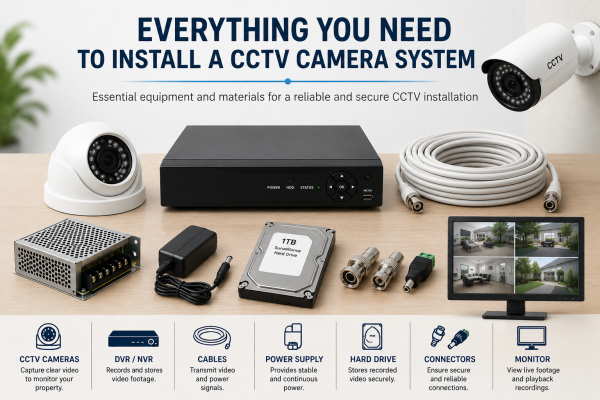
Security has become a top priority for homeowners, business owners, and property managers alike. CCTV camera systems are one of the most effective ways to monitor your property, deter unwanted activity, and keep valuable assets protected. However, many people assume that installing a CCTV system only requires purchasing a few cameras. In reality, a reliable surveillance setup depends on several important components working together.
Whether you're planning to secure your home, office, shop, warehouse, or apartment building, understanding the equipment involved can help you make better decisions and avoid installation issues later on.
In this guide, we'll walk through everything you need to install a CCTV camera system successfully.
1. CCTV Cameras
The most important part of any surveillance system is the camera itself. CCTV cameras capture video footage and allow you to monitor activities in and around your property.
Some common camera types include:
Dome Cameras
Dome cameras are popular for indoor installations due to their compact design and wide viewing angle.
Bullet Cameras
Bullet cameras are commonly used outdoors because they can monitor long distances and are highly visible, helping deter potential intruders.
PTZ Cameras
PTZ (Pan-Tilt-Zoom) cameras allow users to remotely control the camera's direction and zoom level for greater coverage.
2. DVR or NVR
Every CCTV system requires a recording device to store video footage.
DVR (Digital Video Recorder)
DVRs are typically used with analog cameras and process video signals received through coaxial cables.
NVR (Network Video Recorder)
NVRs are used with IP cameras and offer better image quality, advanced features, and easier scalability.
The recorder acts as the central hub of the surveillance system and enables playback, recording, and remote viewing.
3. Hard Drive
A hard drive stores all recorded footage from the cameras.
The amount of storage you need depends on:
-
Number of cameras installed
-
Recording resolution
-
Continuous or motion-based recording
-
Number of days footage must be retained
For most homes and small businesses, a 1TB to 4TB surveillance-grade hard drive is often sufficient.
4. CCTV Cables
Proper cabling is essential for transmitting video and power signals.
Coaxial Cable
Used mainly with analog CCTV systems.
Ethernet Cable (Cat5e or Cat6)
Used for IP cameras to transfer data and, in many cases, power through a single cable using PoE technology.
High-quality cables help maintain stable connections and reduce video signal loss.
5. Power Supply
CCTV cameras require a steady power source to operate reliably.
Common power options include:
-
Individual power adapters
-
SMPS power supply units
-
Power distribution boxes
Selecting the correct power supply ensures cameras operate without interruptions or voltage issues.
6. Connectors and Accessories
Connectors create secure links between cameras, cables, and recording equipment.
The most commonly used connectors include:
-
BNC Connectors for analog systems
-
RJ45 Connectors for IP camera systems
-
DC Power Connectors
Good-quality connectors improve system reliability and minimize maintenance issues.
7. Monitor or Display Screen
A monitor allows users to view live camera feeds and review recorded footage.
Many CCTV systems can be connected to:
-
Computer monitors
-
LED displays
-
Smart TVs
While mobile viewing has become increasingly popular, having a dedicated monitor remains useful for security staff and business owners.
8. Internet Connection and Networking Equipment
If you want to access your cameras remotely, you'll need network equipment such as:
-
Broadband Internet Connection
-
Wi-Fi Router
-
Network Switch
-
PoE Switch
These devices enable mobile viewing and remote management through smartphone apps and web browsers.
9. Mounting Brackets and Junction Boxes
Proper camera placement is critical for effective surveillance.
Installation accessories such as mounting brackets and junction boxes help:
-
Secure cameras firmly
-
Protect cable connections
-
Improve overall appearance
-
Shield wiring from weather and tampering
These accessories are especially important for outdoor installations.
10. Cable Management Materials
A professional CCTV installation should look clean and organized.
Common cable management materials include:
-
PVC Pipes
-
Flexible Conduits
-
Cable Clips
-
Cable Ties
-
Trunking Channels
These materials protect cables from physical damage and help maintain a neat installation.
11. Power Backup System
A CCTV system should continue operating even during power outages.
Popular backup solutions include:
-
UPS (Uninterruptible Power Supply)
-
Inverter Systems
-
Battery Backup Units
Power backup ensures continuous recording and uninterrupted security coverage.
12. Installation Tools
Professional installers use various tools to ensure accurate and safe installation.
Typical tools include:
-
Drill Machine
-
Screwdrivers
-
Crimping Tool
-
Wire Cutter
-
Measuring Tape
-
Voltage Tester
-
Ladder
Using the right tools helps achieve a secure and long-lasting installation.
Why Quality Materials Matter
Many CCTV issues can be traced back to poor-quality cables, connectors, or power supplies rather than the cameras themselves.
Investing in quality installation materials provides:
-
Better video performance
-
Longer equipment lifespan
-
Reduced maintenance costs
-
More reliable recording
-
Improved overall security
A well-installed CCTV system can serve your property effectively for many years with minimal issues.
Final Thoughts
Installing a CCTV camera system involves much more than simply mounting cameras on a wall. From recorders and hard drives to cables, power supplies, and networking equipment, every component plays an important role in creating a reliable surveillance solution.
By understanding the essential materials required for installation, you can make informed decisions and ensure your security system delivers the protection and peace of mind you expect.
Whether you're securing a home, office, retail store, warehouse, or industrial facility, choosing quality equipment and professional installation will always provide the best results.